

Need information on a product's features, an installation, a quote or simply to make an appointment.
How to avoid
limescale in pipes?
As soon as hard water starts to flow somewhere, tart formation is inevitable. It sticks everywhere, clogs nozzles and pipettes and complicates your work. In the pipes, its effect is all the more damaging because you can't see it taking hold. It's only when the pipe is heavily scaled, or even blocked, that problems appear.
How can I limit limescale build-up? How can you maintain your pipes properly and keep them in good condition over the long term? LM Innovation can help.
Our solutions combat the effects of limescale by acting naturally on the water you use every day. Find out how to maintain your pipes simply and naturally, so you don't have to worry about descaling.
The consequences of limescale for professionals
The effects of limescale can vary from one home to another. They range from deposits on shower walls to the scaling of washing machines. Although painful, the consequences are reversible.
But for breeders, growers, hoteliers and even industrialists, the effects of limestone can cause major problems.
Limescale increases your energy bill
When limescale deposits in the pipes and resistors of the system that heats your water, it reduces its efficiency. As a result, you use more energy to reach the desired temperature. On a company scale, this harmful effect is particularly noticeable when the electricity bill drops. Especially if you regularly use hot water.
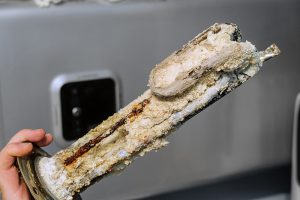
Limescale affects the condition of your pipes
In small pipes, scale plugs form easily if the water is hard. Also, in a drip system or in pipette drinkers, a large number of scale plugs can have consequences for an entire production run.
But beyond these minor clogs, limescale degrades pipes. If left unchecked, the deposits build up until the pipes eventually burst. Your pipes start to leak, and it's not always possible to detect this. It's only when your water consumption skyrockets that you recognize the problem.
How to get rid of limescale?
Lemon, bicarbonate of soda, white vinegar... These grandmotherly tricks are useful for eliminating a few stains in the home. But how do you tackle the problem when it's your entire pipe network? Multiplying chemical products in the hope of dissolving scale build-up is one solution. But only in the short term.
LM Innovation technology: a solution for all your pipes
To combat limescale, you have to prevent it from clinging to everything. And that's exactly what happens with LM water. When your water passes through one of our devices, it modifies the structure of the limescale to reduce its ability to stick. As a result, it circulates in the water, depositing less on the walls of your pipes.
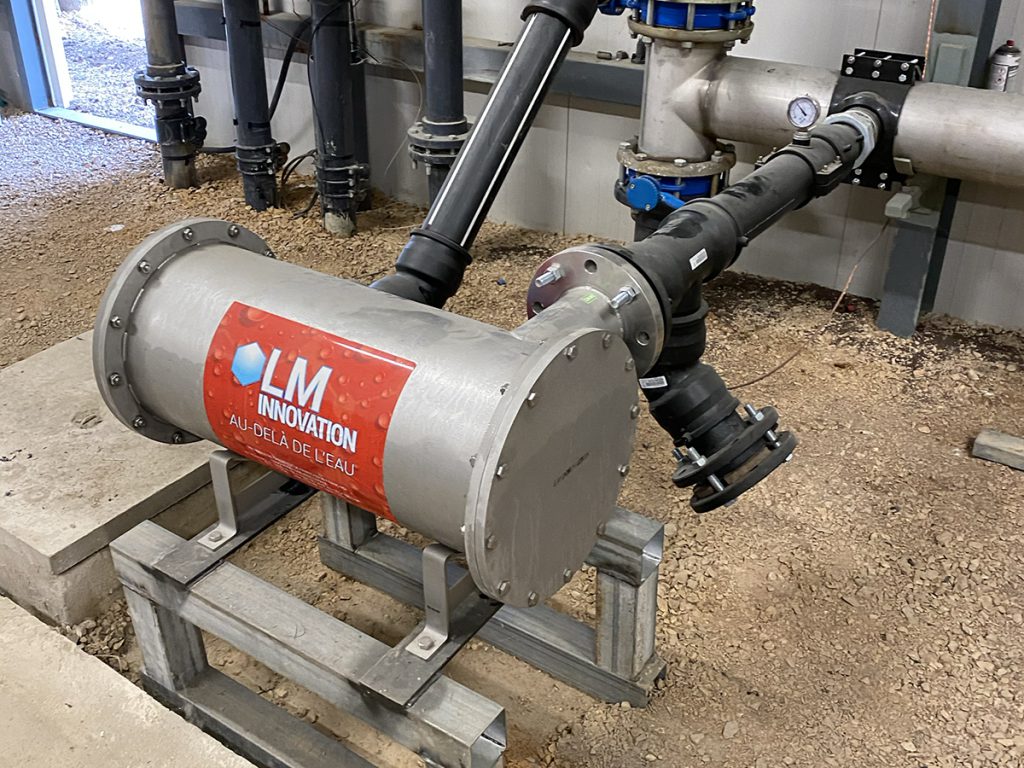
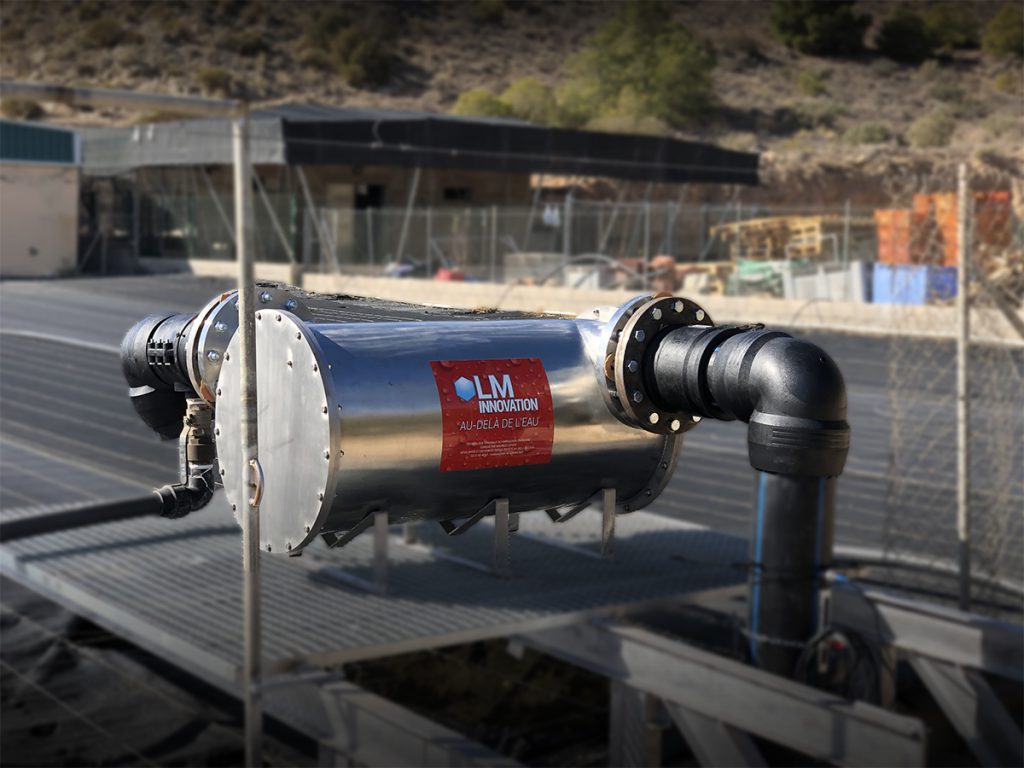
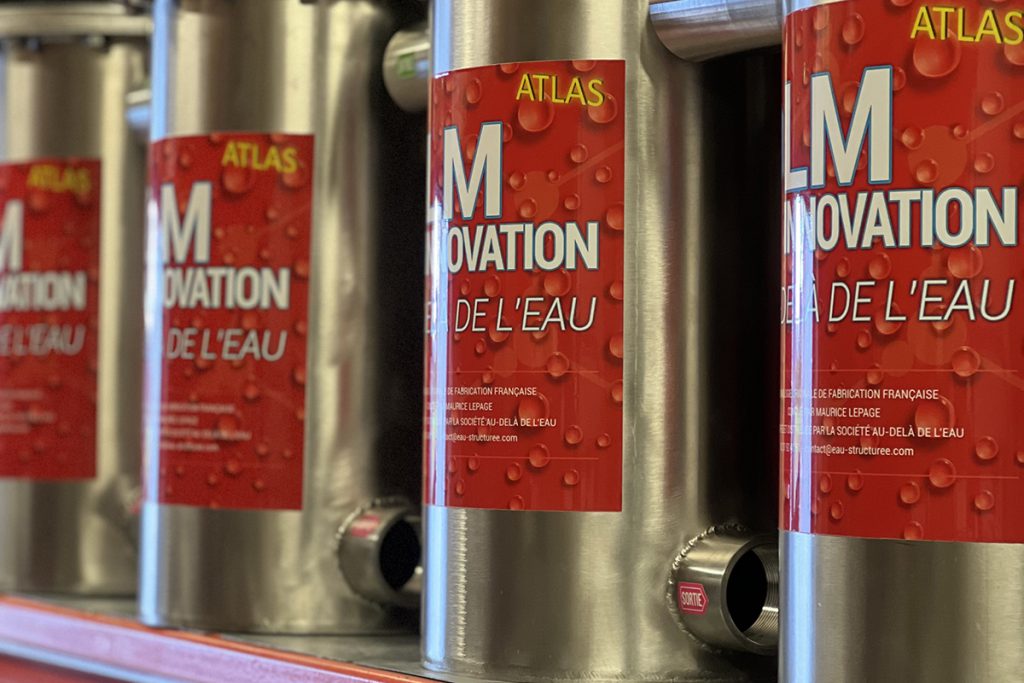
What's more, LM water is more efficient. It allows you to maintain your pipes on a daily basis. Over the long term, it ensures the good condition of your entire pipe network, considerably reducing the need for chemical maintenance products. On a corporate scale, this benefit can also reduce the cost of treating your wastewater.
LM water, an economical long-term solution
LM Innovation technology can be installed on a general water supply, a well or even a borehole. It can be adapted to different flow rates according to the needs of your profession.
Please note: our solution is not a softener. Unlike softeners, LM Innovation technology requires no consumables, maintenance or energy.
All you need to know about limescale for better limescale removal
Where does limestone come from?
Water is often referred to as more or less hard, depending on the region of France. In fact, it's the geology of certain areas that gives water its hardness. Before it reaches your plumbing system, water passes through different types of soil. As it passes through sedimentary rock, it becomes loaded with calcium and magnesium. These two minerals are responsible for the formation of limescale, particularly in your pipes. But their presence in water, although natural, is problematic.
Hard and soft water
Water rich in limescale is called hard water. On the other hand, a low level of limescale means that the water is soft.
Water hardness is expressed in French degrees (°F). To find out the quality of the water running through your pipes, contact your water supplier. He'll give you the results of the sanitary inspection carried out by the ARS (Agence Régionale de Santé) in your area.

Limescale and scaling: what's the difference?
Limescale and tartar are two different elements. Limescale results from the presence of minerals in water. Scale, on the other hand, is an effect of limescale. As limescale is able to adhere to surfaces, it accumulates in pipes. Over time, it forms deposits that harden when the water is heated. These deposits are known as limescale, and they affect the condition of a pipe and, more generally, your entire plumbing system.
A solution for households
LM Innovation technology adapts to improve the water in your home. House or apartment, discover the benefits of LM water in your home.