

Need information on a product's features, an installation, a quote or simply to make an appointment.
Fight mildew with a natural treatment
A source of stress for all growers, downy mildew scars plant leaves as soon as there's too much humidity. Find out how to prevent its development and treat infected plants.
Everything you need to know about downy mildew to avoid it more effectively
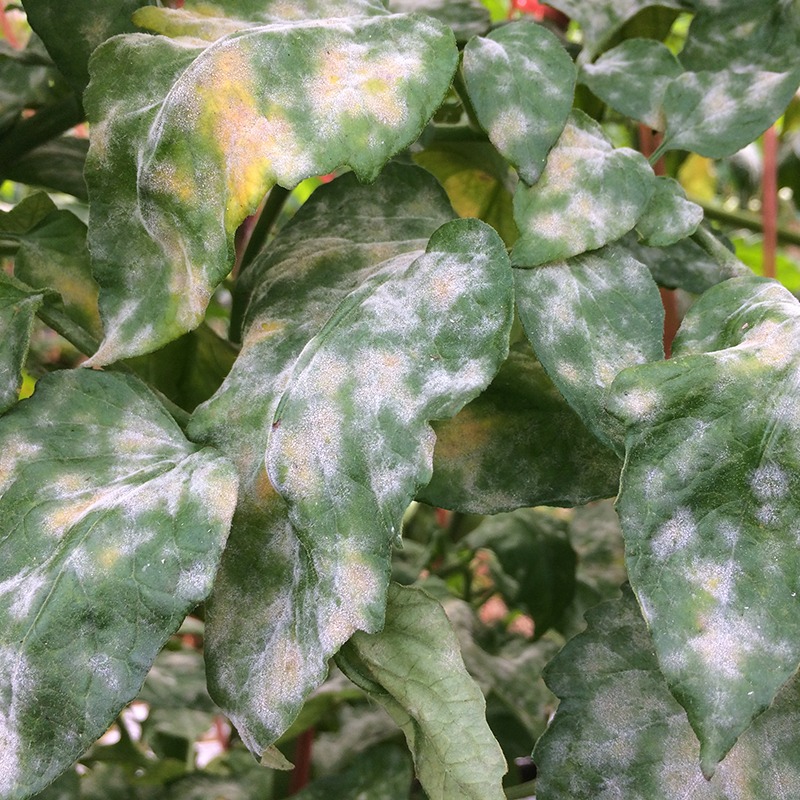
What is downy mildew and how do you recognize it?
What is downy mildew and how do you recognize it?
Downy mildew is a fungal disease. It is caused by a filamentous organism similar to a fungus, which parasitizes the plant. Oidium and rust fall into the same category.
Oomycetes are responsible for this disease. A veritable scourge on crops, they attack plants, starting with their leaves. Downy mildew can be easily detected by its distinctive symptoms: brown or yellowish spots on the top of the leaves and white down underneath. If left untreated, the disease spreads throughout the foliage, then to fruit or tubers, and the plant decomposes.
The term mildew is generic. It groups together several species of oomycetes, each of which attacks different crops: tomatoes, potatoes, cabbage, etc. One of the best known is downy mildew, against which the Bordelais created the famous Bordeaux mixture in the 19th century.
Conditions for the development of mildew
Downy mildew loves water. It thrives in warm, humid environments. Moderate temperatures accompanied by periods of rain encourage the rapid growth of this fungus. Moreover, crops grown in areas with limited air circulation are particularly vulnerable to this disease.
The harmful effects of mildew on crops
This pseudo-fungus was responsible for the "potato famine" in Ireland in the 19th century. Its development is therefore not to be taken lightly.
The effects of late blight on crops are disastrous, going far beyond the simple deterioration of leaves. Damage includes reduced crop yields, deterioration in the quality of harvested fruit and vegetables, and disruption of plant production cycles. By affecting leaves and stems, mildew reduces plant vigour. It weakens their ability to develop normally.
Prevent mildew
With mildew, the adage "prevention is better than cure" is more important than ever. Once established, the disease spreads exponentially, just as a fungus does. And while existing treatments are effective, they must be used with caution.
Classic prevention methods
- Space out plants: this slows down the spread of mildew. Spores pass less easily from one plant to another.
- Elevate plants: planting on mounds helps water run off.
- Water in the morning: it's better to water in the morning than in the evening, so that the foliage dries faster.
- Respect crop rotation, in the case of polyculture: mildew spores can survive in the soil. Planting their favorite plants in the same place year after year is like rolling out the red carpet for them.
Nettle purin is also an effective preventive treatment. In addition to its action against mildew, it strengthens the plant's immune system and promotes growth.
The LM innovation solution
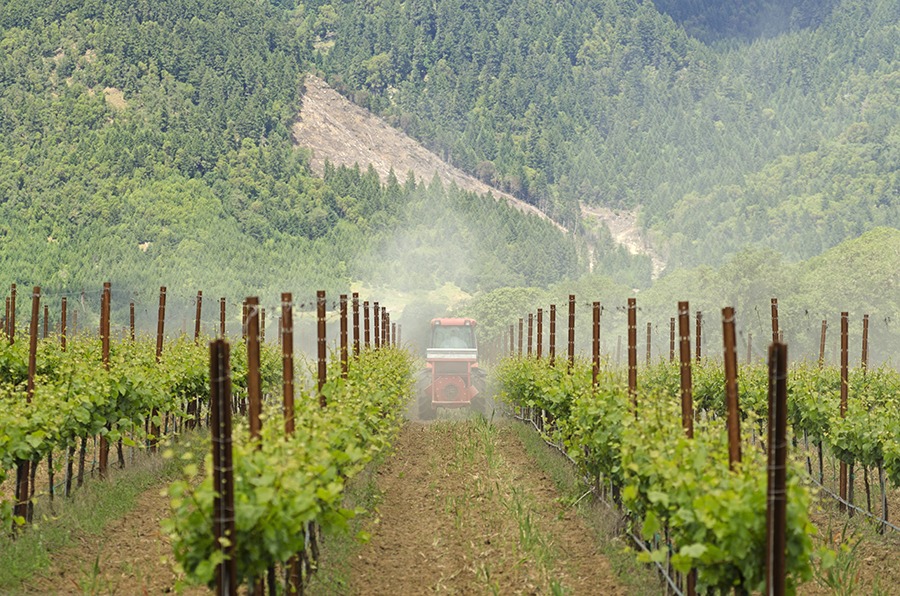
LM Innovation technology for professionals improves water quality and optimizes its properties.
Thanks to its natural characteristics, LM water helps you to treat your crops, even as a preventive measure. Unlike rainwater, its quality slows down the appearance of diseases such as mildew. After heavy rain, spray LM water on the leaves of your plants, as well as on fruit and vegetables, to limit the risk of fungus.
Our technology also enables the water to better penetrate the plants. Once mixed with LM water, nettle purin is better assimilated by plants.
Our devices can be installed on a general water supply, well or borehole. The benefits of LM water go far beyond treating your crops.
Discover all the possible applications:
Treating mildew
Rain, humidity and heat have taken their toll, and mildew has set in on your plants. Treatment is therefore necessary.
Start by cutting off any affected leaves. Another method is to burn the damaged parts to remove the spores at the same time. Also remove any affected fruit or vegetables. If an entire plant is affected, it should be uprooted.
Copper-based treatments, such as Bordeaux mixture, are the most widely used to get rid of mildew. However, their over-frequent use is harmful to the soil and the micro-organisms present in the soil. It is therefore necessary to limit their use.
Here, too, LM water comes into play. As anexcellent solvent, it boosts the effectiveness of Bordeaux mixture. Its high penetration capacity enables plants to better assimilate the treatment. Your spray mixture becomes more efficient, so you can spray much less.
The same principle applies to baking soda. This product, which is less harmful to your soil, replaces Bordeaux mixture. For 1 liter of water, mix 3 teaspoons of baking soda and 1 tablespoon of black soap. Apply the solution to the leaves for preventive action, or as soon asthe first spots appear.

LM water for households
LM Innovation technologies are being adapted for installation in private homes. Do you have a vegetable garden? A garden? Indoor plants? Install La Dauphine in your home and benefit from high-quality water for your plants. Enjoy beautiful tomatoes in summer and delicious spinach in winter.